


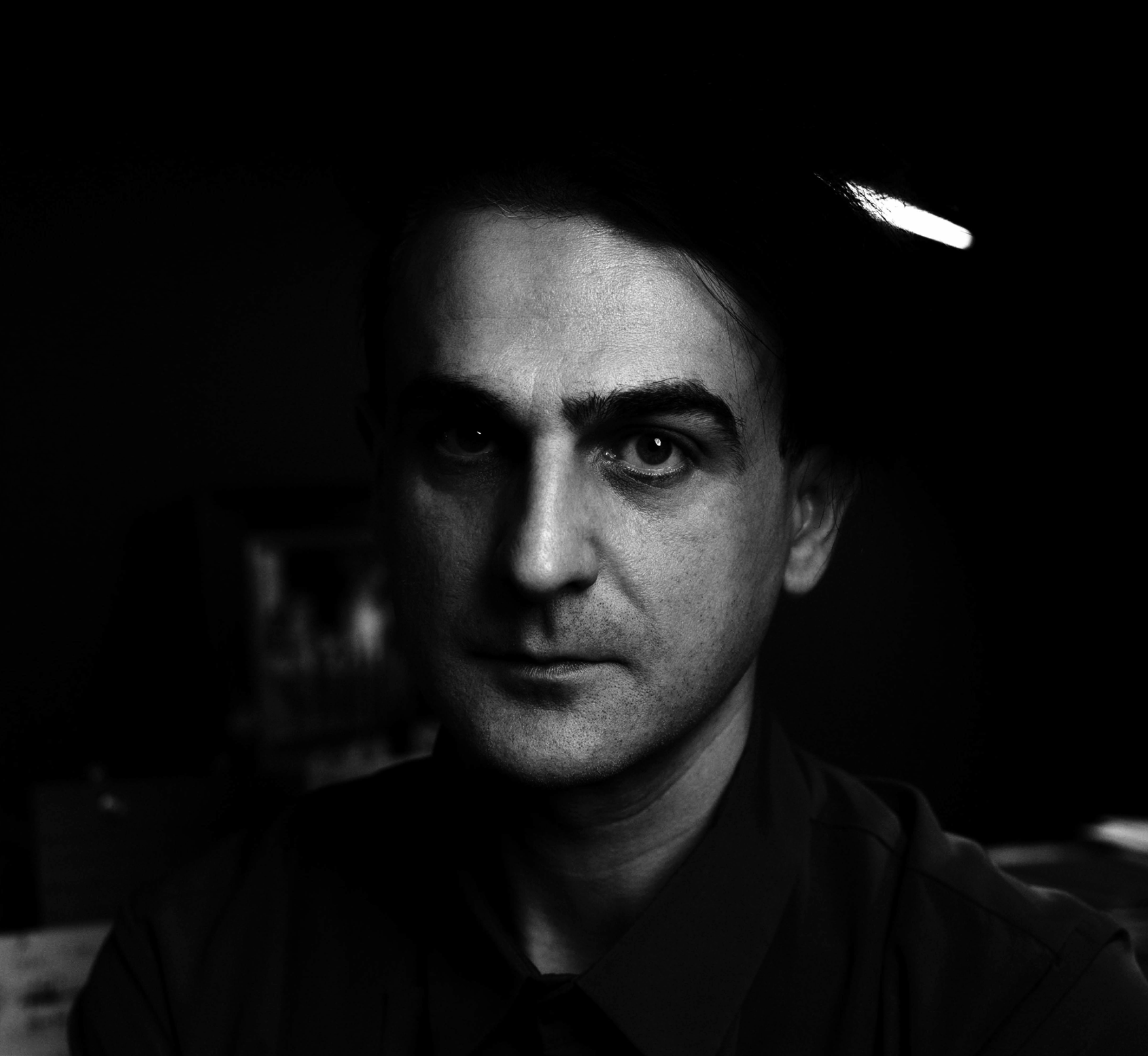
About the album
The 21st century has been marked by a wide range of innovations in the field of classical music: intensive exploration of extended playing techniques, acoustic principles, and the newly discovered complexity of timbres has enabled a small number of mostly European composers to redefine the concept of “sonic excess.” The exploration of frequencies has made it possible to combine the tonal extremes of the scores with both the concept of energetic overexposure and the physical presence of the materials. It is essentially the materials that need to change.
The tonal and aesthetic context in which Simone Santi Gubini's work is situated is based precisely on these considerations. When one experiences the “tonal excess” in its depth, the originality of his vision becomes apparent: the creation of a genuine psycho-acoustic shock, the immediacy of which strikes the listener from the very first hearing. Although his composition focuses on the rules of timbre, it offers scope for a reformulation of musical parameters, both in terms of their conventional treatment and in terms of the application of tonal material. Furthermore, it is striking how detailed his work with the instruments is, using flageolets, multiphonics, and sound clusters, something that requires long preparation on the part of the musicians and, in any case, competence and the highest level of skill.
Considering Santi Gubini's inventive contribution to contemporary classical composition, one could say that he probably laid the foundation for something unique in music history when he conducted his personal acoustic research into the validity of the erratic state of sound, ignoring today's conventions of notation. In doing so, Santi Gubini found confirmation and clear evidence of his studies on acoustics and instrumentation, which he had conducted in relation to the instability of sound and its defectiveness.
This monograph shows us Santi Gubini's development on his artistic path and his desire for new insights.